Proprio
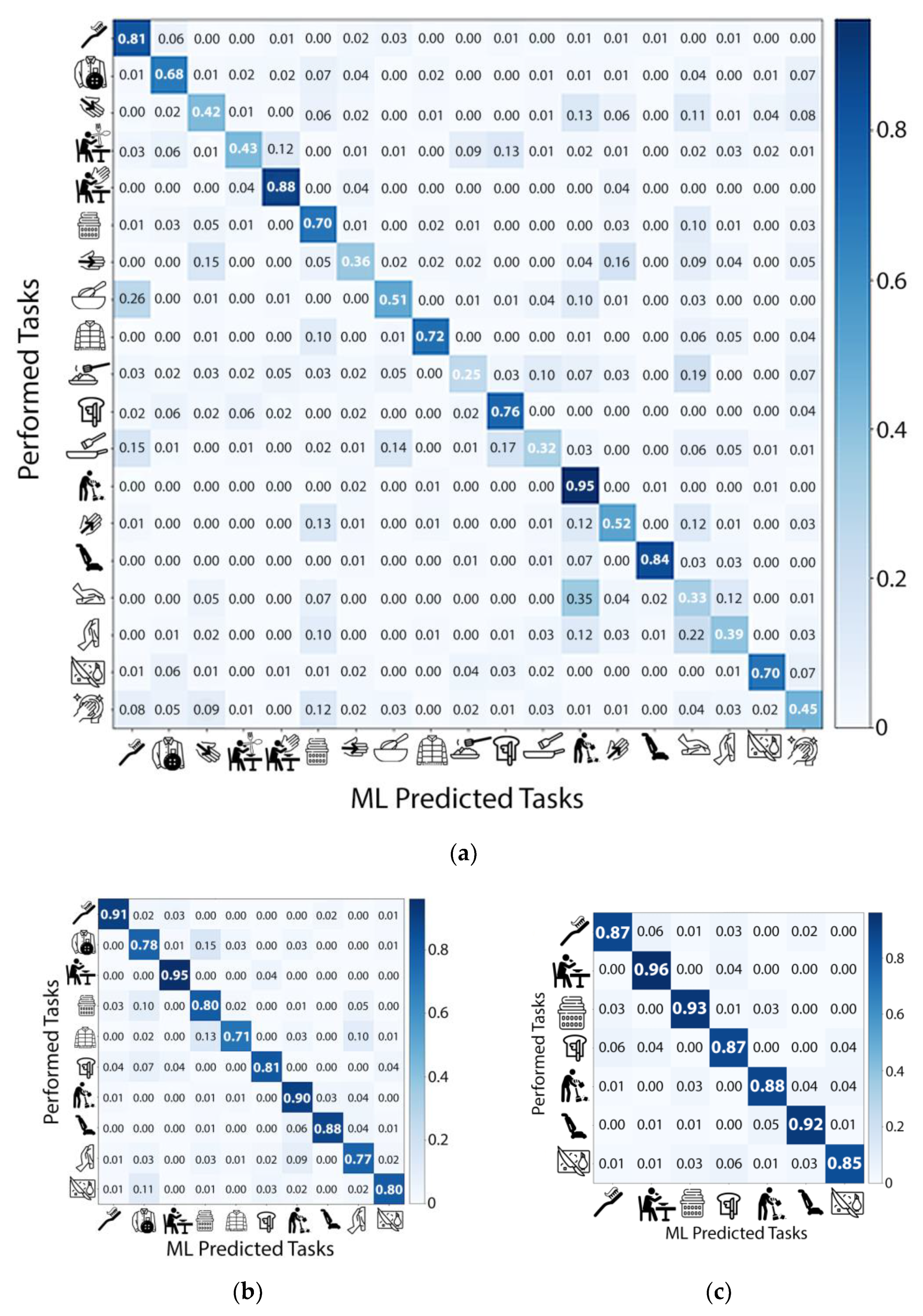
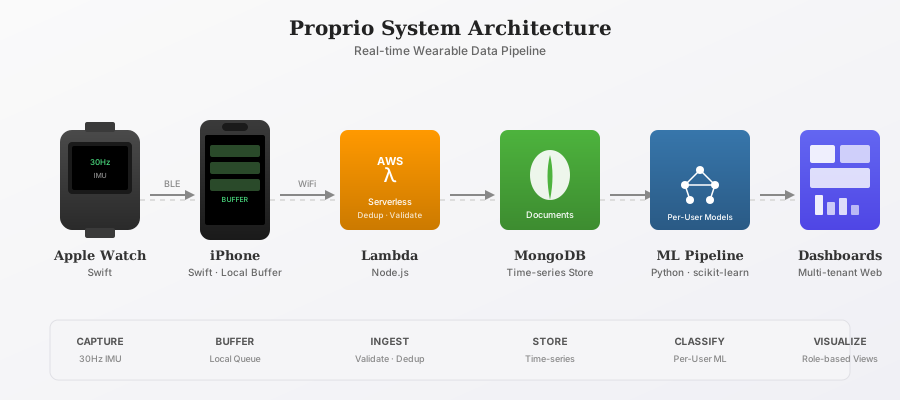
Real-time wearable data pipelineProprio was a full-stack real-time data platform: Swift watch app → AWS Lambda ingestion → MongoDB → ML classification → web dashboards. $100K STTR funded, shown to have 20% better accuracy than state-of-the-art approaches.
End-to-end ownership of a streaming pipeline that processed continuous IMU data from Apple Watches, ran patient-specific ML classifiers, and served results to clinician-facing dashboards.
A sensor-to-dashboard pipeline with real-time streaming, serverless ingestion, document storage, ML inference, and multi-tenant visualization.
Engineering Challenge
The problem: continuous sensor data from wearables, but no infrastructure to make it useful.
- High-frequency capture — IMU data at 30Hz from Apple Watch
- Two-hop delivery — watch → iPhone (local), iPhone → AWS (on WiFi)
- Unreliable connectivity — gaps in uploads, packet loss, out-of-order delivery
- Per-user models — population models fail; each user needs calibration
- Multi-tenant access — patients, clinicians, and researchers need different views
The solution: a resilient upload pipeline with local buffering on iPhone, deduplication and gap handling on ingest, and a ML pipeline that trains per-user classifiers.
System Architecture
Serverless Lambda Pipeline Handling 30Hz IMU Streams
- Serverless ingestion — Lambda functions handle bursty uploads from iPhones
- Deduplication — handle retries and out-of-order delivery gracefully
- Gap detection — identify missing time windows, request re-upload if available
- Batched writes — aggregate samples before storage
MongoDB with Time-Series Indexing for Multi-Tenant Access
- Document model — flexible schema for heterogeneous sensor data
- Time-series indexing — optimized for range queries on timestamped data
- Per-user partitioning — data isolation for multi-tenant access
Per-User Classifiers with 20% Better Accuracy
- Feature extraction — time-domain and frequency-domain features from raw IMU
- Per-user training — calibration sessions generate labeled data for individual classifiers
- Model registry — versioned classifiers deployed per user
Watch → iPhone → Cloud Full-Stack Pipeline
- Swift watch app — background 30Hz IMU capture, streams to paired iPhone
- Swift iPhone app — local buffering, WiFi-triggered uploads to AWS
- C# data tools — MongoDB queries, data structuring for analysis
- Web dashboards — role-based views for patients, clinicians, researchers
My Role
As Co-Founder & Technical Lead, I owned the full technical stack:
- Designed and implemented the end-to-end data pipeline from watch to dashboard
- Built the serverless ingestion layer and MongoDB data model
- Co-invented the patient-specific classification method (published, peer-reviewed)
- Wrote the STTR grant that secured $100K funding
- Ran 50+ customer discovery interviews and clinical validation studies
The company pivoted when we hit the R01 funding barrier. The experience shaped how I think about building data-intensive platforms—real-time pipelines, per-user state, multi-tenant access patterns.
Results
- 20% better accuracy than published state-of-the-art (per-user models vs population models)
- $100K STTR grant — wrote and won federal funding for R&D
- Peer-reviewed publication — validated methodology in production
- NSF I-Corps + BioGenerator — customer discovery and startup accelerator
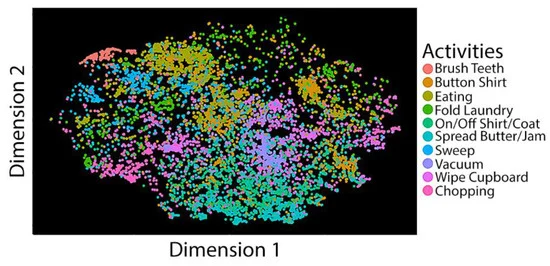
How does this connect? Proprio showed me this pattern in a different domain: sensor architecture determining what behaviors we could recognize. See the throughline →